
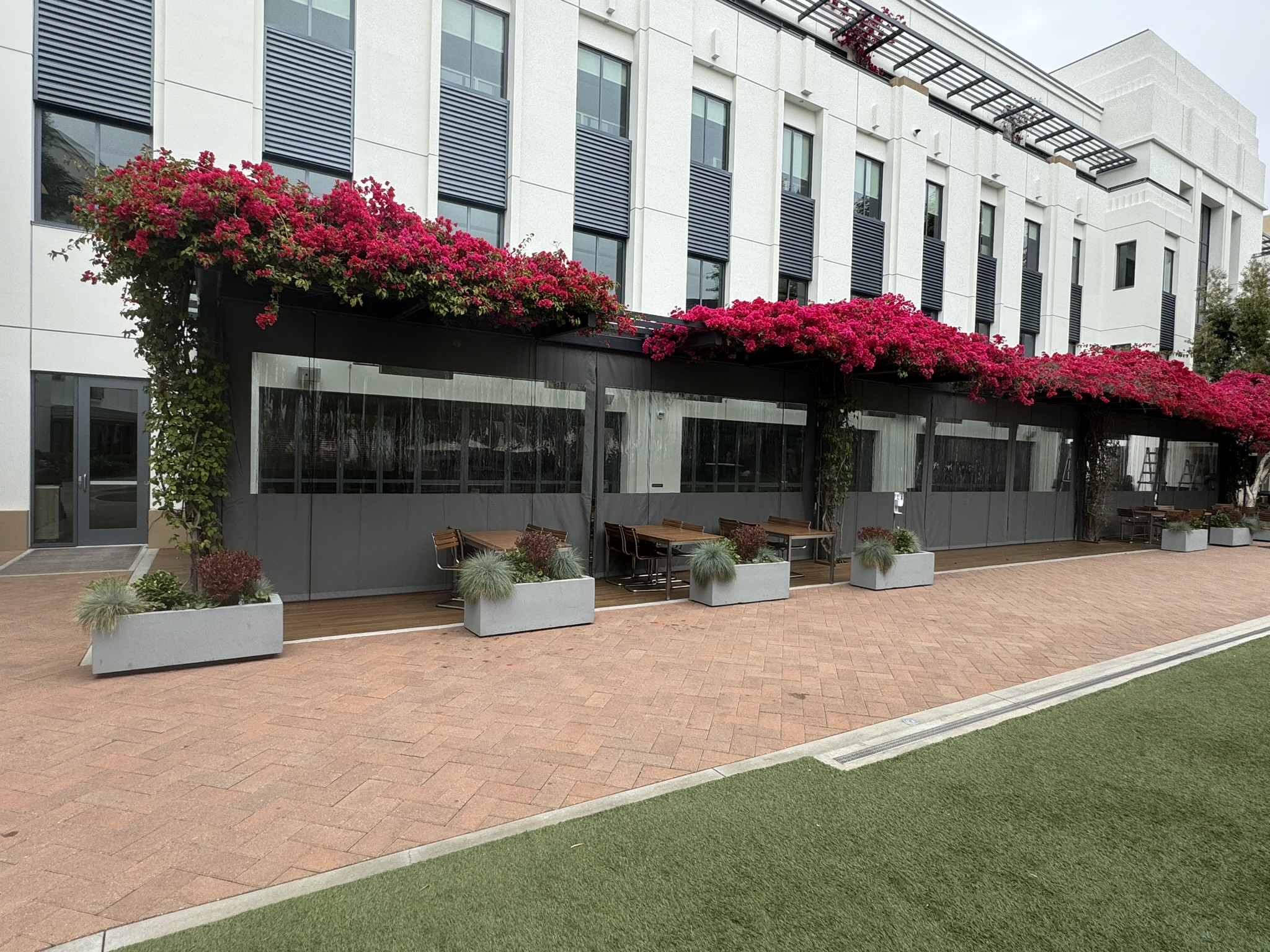
A covered restaurant patio can still feel exposed along its open sides. At a hotel cabana, the same opening may need privacy. Clear vinyl, opaque fabric and mesh change those spaces in different ways, even when the panels fit the same opening.
For architects, designers and contractors, the useful distinction is what people will see and experience when the curtains are closed. Universal Awning's outdoor patio curtains include clear vinyl, exterior fabric, mesh and combinations of those materials. Each has a place in commercial dining, hospitality and other covered outdoor areas.
Clear vinyl keeps the view through the patio edge
Clear-vinyl panels suit a patio where the view matters. Guests can see beyond the curtain, and people outside can still see the dining area. That visual connection can be useful along a restaurant frontage or a hotel terrace overlooking a courtyard.
A transparent section also admits daylight through the side of the space. Opaque borders and lower panels will change how much of the opening remains clear, so two curtains described as clear vinyl can look quite different once installed.
Clear vinyl provides little visual privacy through its transparent areas. A dining space that needs screening from an adjacent walkway may benefit from a solid lower section or fabric at selected openings. A broad clear window makes more sense where preserving the outlook is the priority.
Opaque fabric gives privacy and a stronger band of color
Exterior fabric can screen a cabana, separate a hospitality seating area or shade an exposed side of a patio. With the curtain closed, an opaque panel blocks the view through that part of the opening. This makes fabric useful where guests need separation from nearby circulation.
Fabric also becomes a visible part of the design. A full-height panel presents a larger area of color than a narrow border around a clear window. On a hotel terrace, repeating that color across several openings can connect the curtains visually with the furniture and surrounding finishes.
The tradeoff is the lost outlook through the covered area. A fabric curtain can provide privacy at one side while a different material preserves the view elsewhere.
Mesh filters the opening while allowing airflow
Mesh suits a different balance of shade, screening and openness. Universal offers screen panels that can reduce sun and visibility while allowing varying levels of airflow. The selected mesh determines how open or screened the panel feels.
For a covered dining area, that can be useful when the aim is to soften an exposed edge while keeping air moving through it. Mesh should not be assumed to provide complete privacy: the view through the screen is part of the material choice.
Its openings also mean it should not be presented as a sealed weather barrier. A mesh panel and a clear-vinyl panel serve different expectations even when their dimensions match.
Combination panels divide the opening by function
One curtain can include a clear window, an opaque lower section and a fabric border. This gives the designer control over where the view stays open and where the curtain screens the space.
Universal's Sony Studios project pictured here shows that arrangement beneath a planted trellis. Wide clear sections sit above gray lower panels, with vertical divisions following the patio openings. The photograph shows how a long perimeter can retain transparent areas without making every part of each curtain clear.
The height of the clear section matters to the experience. A seated diner and a standing server look through different parts of an opening; the window proportions determine which parts of the surroundings remain visible.
Opening the curtains changes the design again
Universal's curtain designs can use roll-up, removable, sliding or fixed-panel details. These are project-specific configurations, so a material choice does not automatically establish how a panel will open.
On a working restaurant patio, open curtains still need somewhere to go. A rolled or gathered panel occupies space, and an access opening serves a different purpose from a section that stays closed. Dividing a perimeter into independently operated sections can let staff open a service route while leaving other areas covered.
Weather performance belongs to the whole enclosure
The material name alone does not establish weather protection. Seams, edges, attachments and site exposure affect how a curtain enclosure performs. A covered roof also does not stop weather entering every open side.
Patio curtains provide adjustable side coverage; they should not be described as permanent walls or assumed to create an insulated indoor room. Universal fabricates and installs curtain systems around the structure and its use.
Discuss patio curtain materials with Universal Awning
Talk with the team about views, privacy and side coverage for your restaurant or hospitality project.