
Fixed-frame fabric awnings
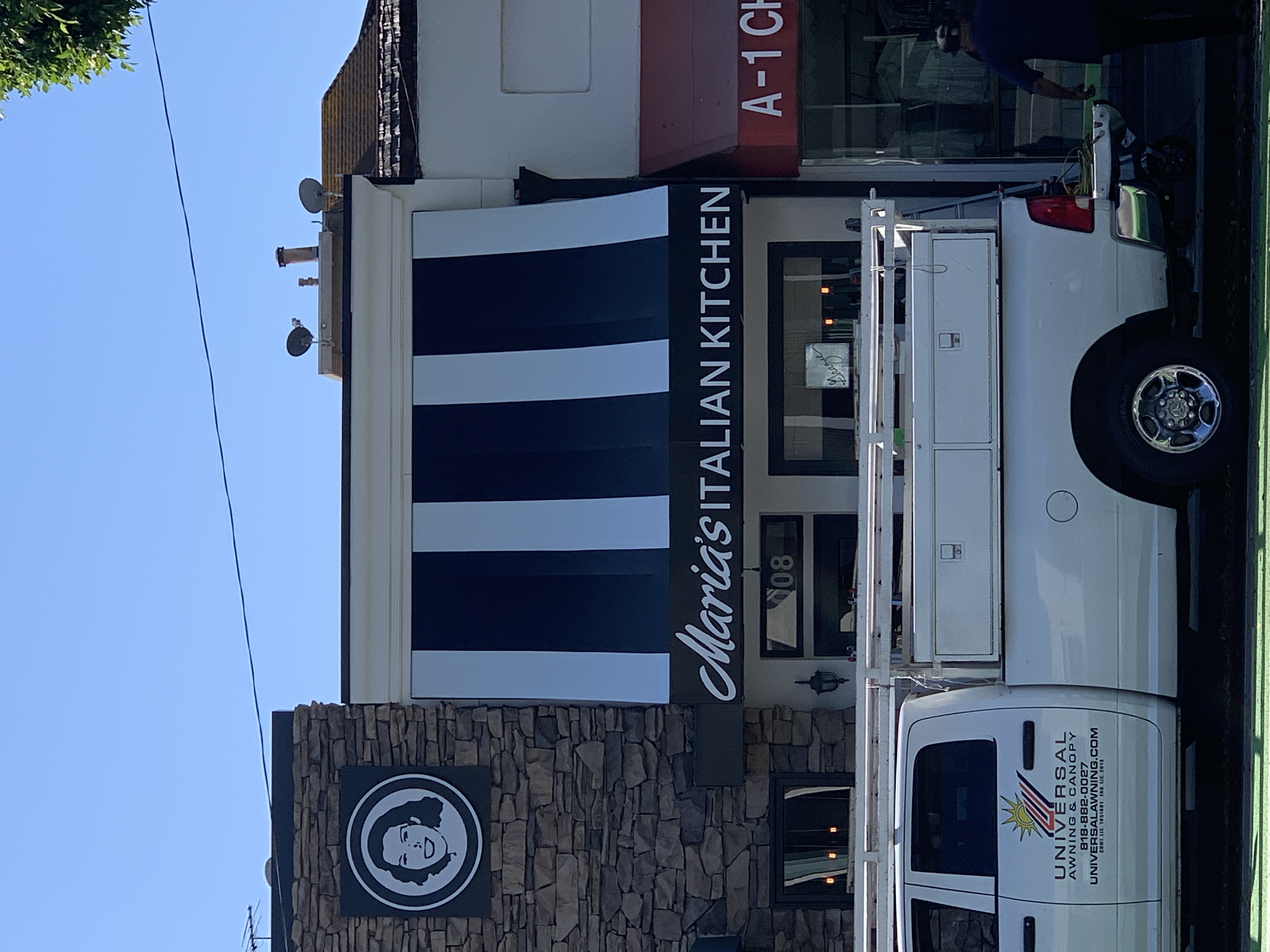
Permanent coverage for storefront windows, entrances, and smaller patios. Frame shape, projection, fabric, and trim can be coordinated with the restaurant exterior.
Fixed canvas awningsRestaurants and food service
From storefront awnings and entrance canopies to retractable patio systems and outdoor dining enclosures, we design, fabricate, and install shade that fits the building, the brand, and the way the restaurant operates.
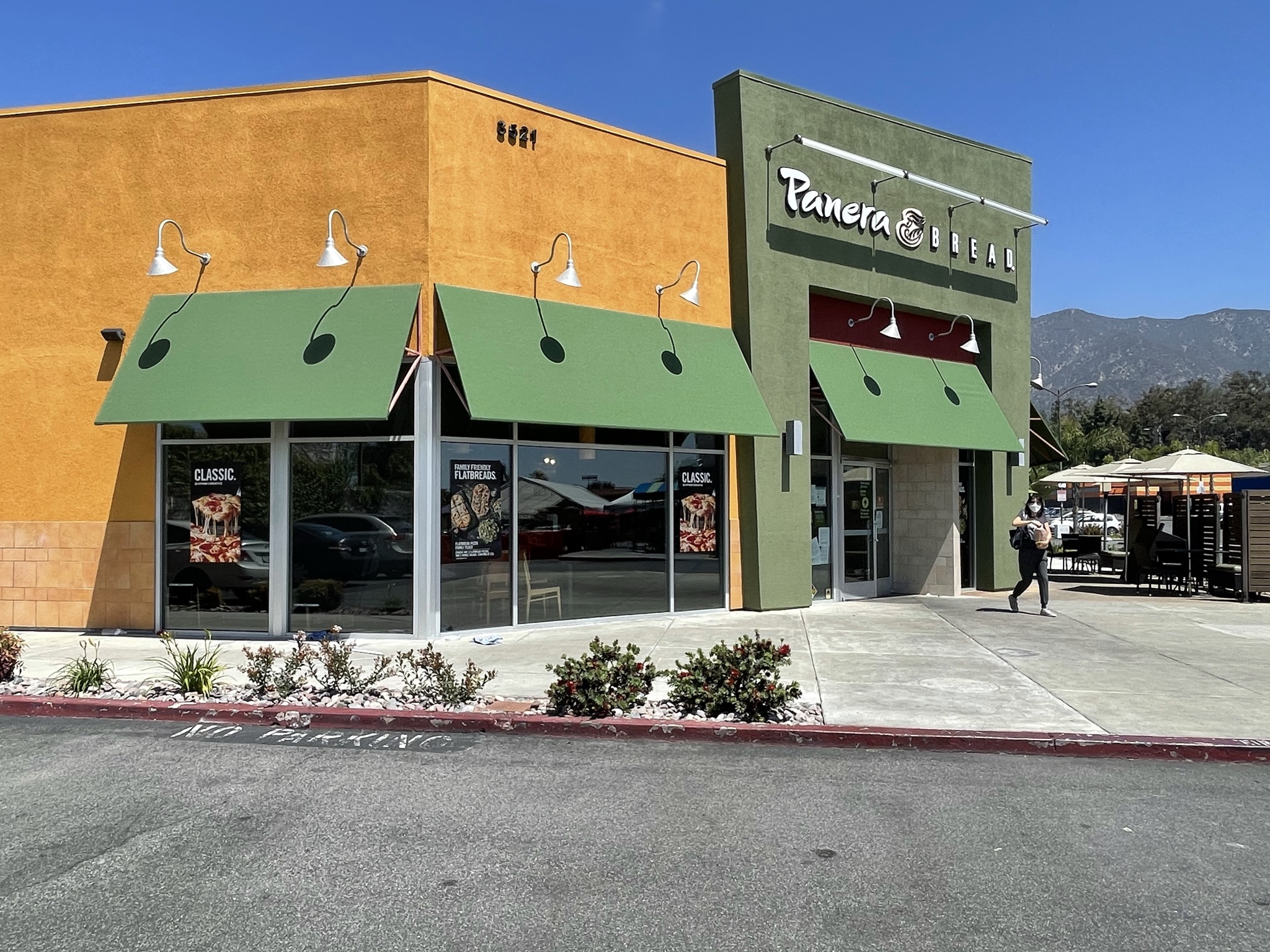
Panera Bread, Pasadena Fixed-frame storefront awnings
Restaurant awning design
A restaurant awning can make outdoor seating more comfortable, give the storefront a stronger presence, cover the path to an entrance, or protect a pickup and waiting area. The right design should improve the space without interfering with guest traffic, service, or the architecture of the building. Our restaurant awning planning guide explains the main coverage, material, branding, and operating decisions.
We begin with the property. Sun exposure, mounting conditions, drainage, clearances, landlord requirements, and operating hours all affect what will work. After reviewing those details, we recommend an awning or canopy that fits the site and supports the way the restaurant is used every day.
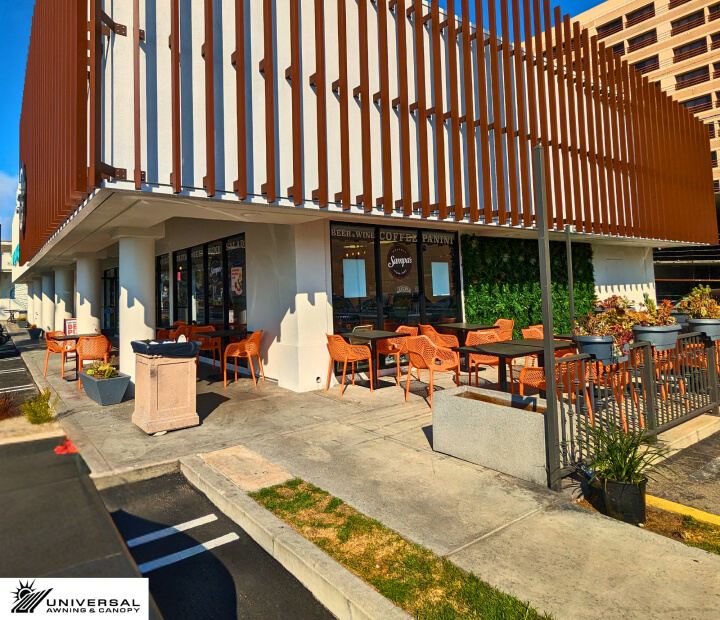
Dining areas, entrances, and service windows
Outdoor dining, storefront windows, guest entrances, and pickup areas all serve a different purpose. The awning should feel like part of the property while giving that specific space the coverage it needs.
Before design begins
Two restaurants can have similar patios and need very different systems. These are the practical questions that help determine the right product, size, placement, and installation approach.
A breakfast patio, a dinner patio, and a pickup area face different sun and traffic patterns. We look at when coverage is needed and how people move through the space.
Dining tables, storefront windows, entrances, walkways, and ordering areas each require a different amount and type of coverage.
Fixed systems provide dependable daily coverage. Retractable systems give operators more control as the sun and use of the patio change.
Wall construction, mounting locations, clearances, drainage, and existing architectural details help determine how the system should be built.
Access, deliveries, guest traffic, neighboring tenants, and operating hours are considered before installation is scheduled.
Restaurant awning options
The product comes after the site review. Coverage, appearance, structural conditions, and day-to-day use determine which type of awning or canopy makes sense.
Permanent coverage for storefront windows, entrances, and smaller patios. Frame shape, projection, fabric, and trim can be coordinated with the restaurant exterior.
Fixed canvas awningsAdjustable shade for patios that benefit from coverage during certain hours and a more open setting at other times.
Retractable awningsMore substantial coverage for large dining patios, courtyards, waiting areas, and outdoor rooms where a wall-mounted awning is not the best fit.
Custom canopiesA durable architectural option for entrances and storefronts that call for a clean, permanent structure with a metal finish.
Metal awningsVertical coverage that can help manage low-angle sun, wind, and exposure around an existing covered patio.
Outdoor patio curtainsSelected restaurant work
This metal entrance awning at Wild Fork shows how a durable commercial system can add coverage without overwhelming the storefront.
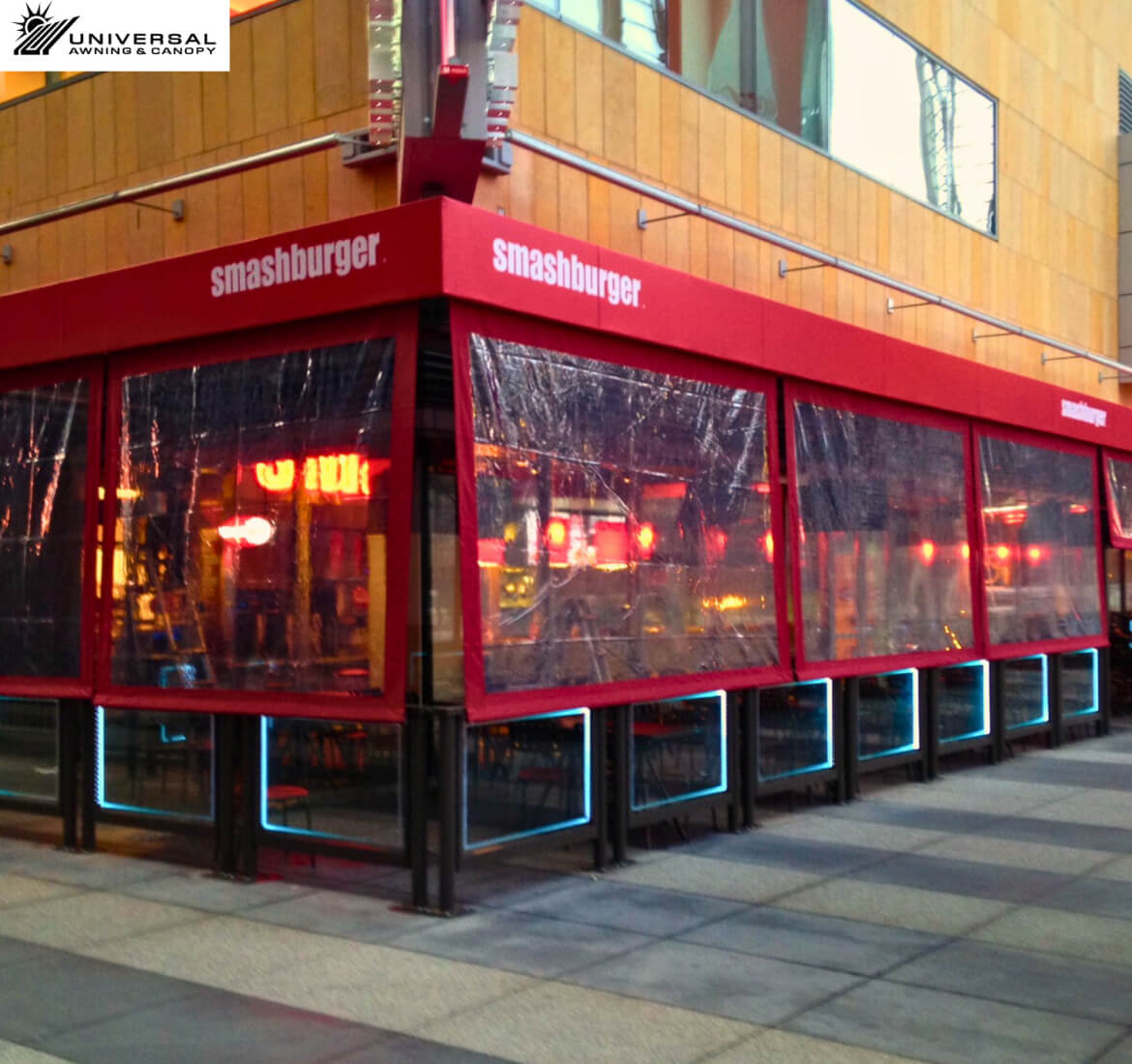
Universal Awning’s restaurant portfolio also includes work for Corner Bakery, Del Taco, Jamba Juice, Panera, Smashburger, BJ’s, Sampa’s, and independent operators throughout Southern California.
Project process
Restaurant projects have to account for business hours, customer access, deliveries, and site conditions. We address those details before fabrication and coordinate installation with the property team.
We document the storefront, patio, entrance, pickup areas, service paths, operating hours, landlord criteria, brand standards, and the coverage goal.
Projection, structure, materials, color, drainage, mounting conditions, guest clearances, and fixed or retractable operation are developed around the property.
Field dimensions, finishes, attachments, access, approvals, and responsibilities are resolved with the owner, landlord, architect, or contractor before fabrication.
Deliveries, staging, guest protection, neighboring tenants, inspections, and installation timing are coordinated to limit disruption.
Restaurant awning questions
Size, structure type, fabric or metal selection, mounting conditions, finish, site access, engineering needs, and installation conditions can all affect cost. The most useful estimate comes after the property and intended use have been reviewed.
A fixed system provides consistent coverage. A retractable awning gives the operator more control over sun and openness. Patio size, sun exposure, attachment conditions, and operating preferences determine which option makes more sense.
Yes. Universal Awning works with architects, contractors, property managers, franchise groups, and restaurant owners. Early coordination helps align the shade structure with the building, project documents, schedule, and site conditions.
Yes. A common design and material standard can be coordinated across multiple locations, while the mounting and site details are adjusted for each property.
Start with the property address, the area that needs coverage, approximate dimensions, desired timing, and any available photos, plans, landlord criteria, or brand standards. If the project is still early, contact the team with what you have.
Universal Awning is based in Reseda and serves restaurant and commercial projects throughout Southern California. Review the service-area directory or contact the team to confirm coverage for a specific property.
Send us the property address, the area that needs coverage, and any plans, photos, or brand requirements you have. Our team can review the project and help you determine the next step.