
Shade sails
Tensioned fabric structures that can cover playgrounds, courtyards, and seating areas with flexible shapes and support layouts.
San Diego shade sail servicesSchools and Education
Universal Awning designs and builds shade sails, lunch-area canopies, covered walkways, entrance awnings, and outdoor learning structures for public, private, and charter schools.
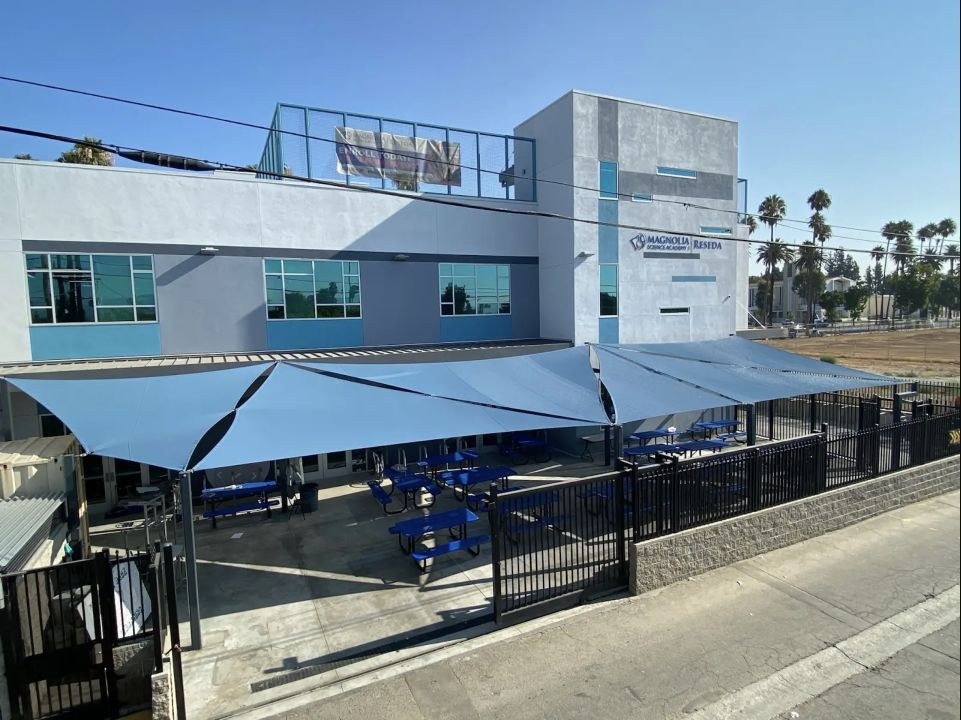
Magnolia Science Academy, Reseda Campus shade sails
Campus use and safety
A school shade structure may cover a lunch area, protect students waiting at pickup, create an outdoor classroom, or make a playground usable for more of the day. A covered walkway can also connect buildings while keeping student circulation protected. The best location and form depend on supervision, circulation, age groups, nearby buildings, and how the space changes from morning through dismissal.
We review those conditions with the project team before recommending a system. Clearances, existing utilities, drainage, access for installation, campus security, and structural requirements all need to be resolved without losing sight of the students and staff who will use the area.
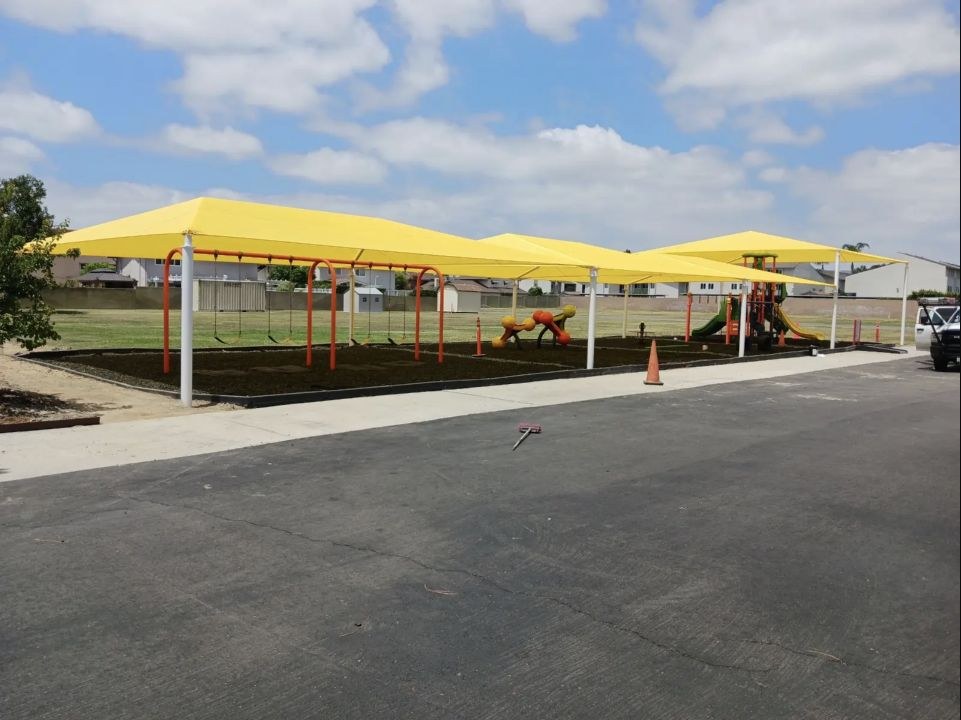
Public, private, and charter schools
Public schools, private schools, and charter schools may follow different procurement and facility standards, but the design questions are similar: who uses the area, when coverage is needed, what the site can support, and how installation can occur safely.
Before design begins
A school project must work around students, staff, security, and an active calendar. These questions help the team define safe coverage and a realistic construction plan.
Age group, capacity, supervision, accessibility, and the activities taking place affect the height, footprint, and placement.
Morning drop-off, lunch, recess, after-school programs, and weekend use create different shade and access needs.
Utilities, drainage, paving, play equipment, trees, buildings, fences, and emergency routes are reviewed before supports are located.
The design must maintain supervision, circulation, equipment clearances, gates, and paths used by students and emergency personnel.
Phasing, fencing, deliveries, noise, and installation access are coordinated around the academic calendar and campus rules.
School and campus shade options
Product selection follows the site review. Span, support locations, required coverage, durability, and the character of the campus all influence the system.
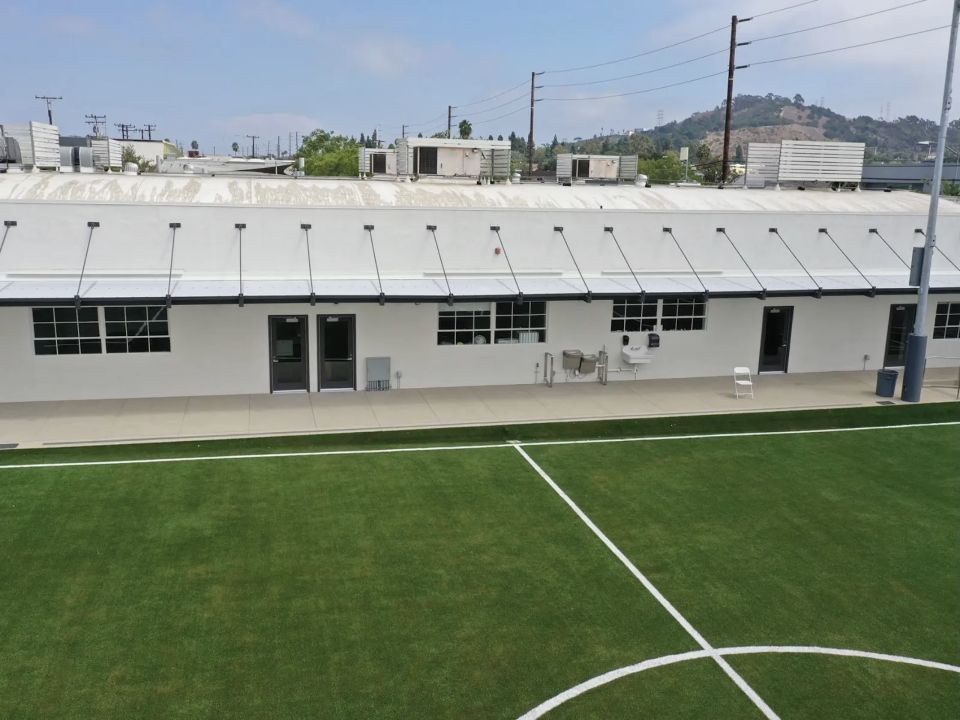
Tensioned fabric structures that can cover playgrounds, courtyards, and seating areas with flexible shapes and support layouts.
San Diego shade sail servicesPermanent coverage for lunch courts, outdoor classrooms, gathering zones, and other areas where building attachment is not practical.
View custom canopiesContinuous or repeated canopy systems for circulation between buildings, pickup areas, and primary entrances.
Explore metal canopiesWindow and doorway coverage for administration buildings, classrooms, concessions, and smaller campus spaces.
View fixed canvas awningsArchitectural shade for staff courtyards, outdoor learning areas, and campus gathering spaces.
View aluminum trellis systemsRelevant project work
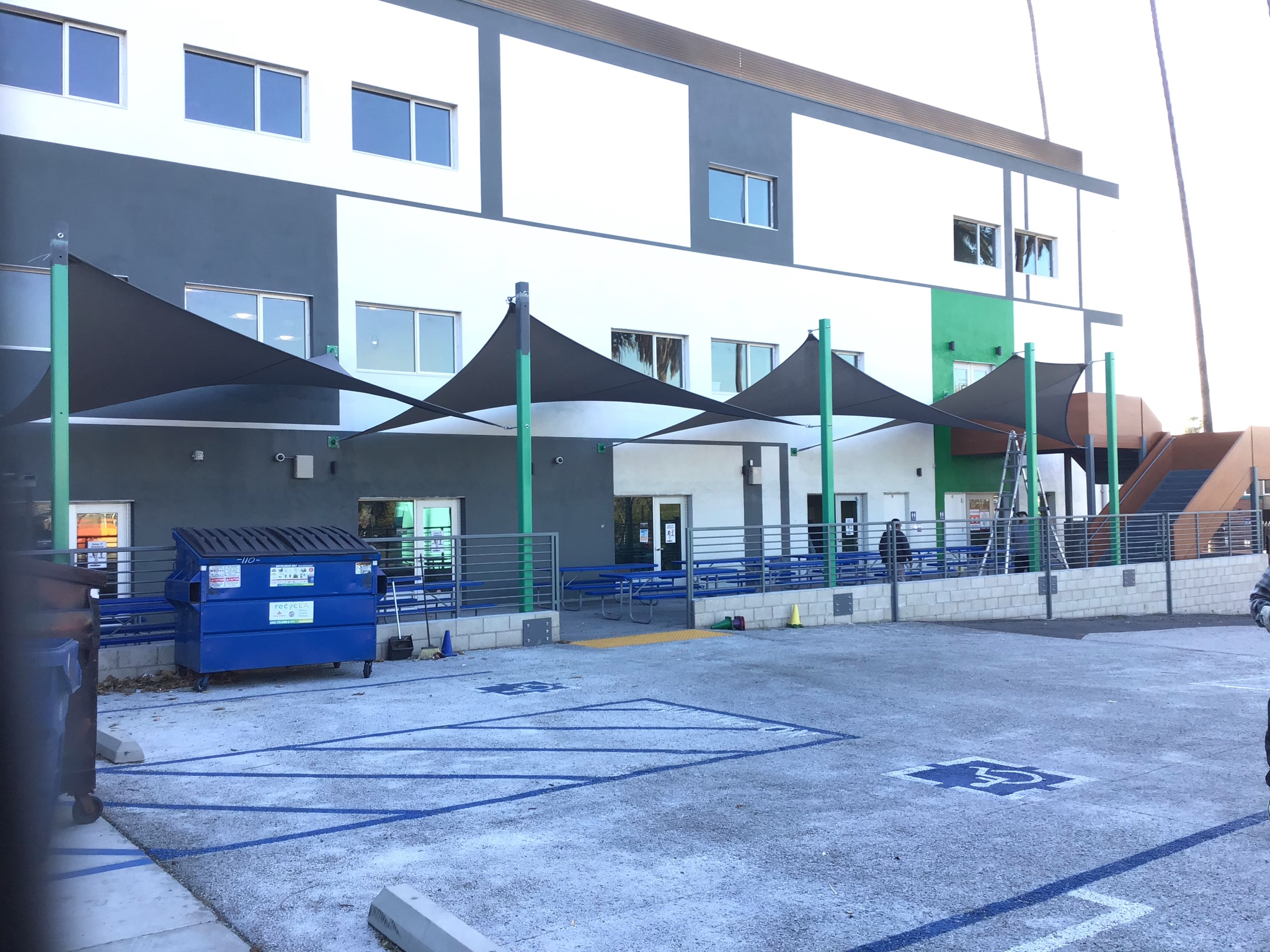
This Silver Lake campus installation shows how shade sails can cover an outdoor lunch area while preserving clear circulation and supervision.
Project photos are examples of Universal Awning systems. A school installation is designed around the specific campus, users, and facility requirements.
Project process
School work is planned around campus security, the academic calendar, student circulation, deliveries, and safe separation between construction and occupied areas.
We document who uses the area, when it is occupied, the coverage goal, supervision needs, campus standards, and the preferred construction window.
The design is developed around play equipment, tables, walkways, utilities, drainage, sightlines, emergency routes, and safe support locations.
Dimensions, materials, colors, structural information, access requirements, and district or project-team comments are resolved before fabrication.
Fencing, deliveries, staging, noise, inspections, and installation access are coordinated around the academic calendar and campus security rules.
Questions about schools and education
Cost depends on the covered area, number and height of supports, fabric or roof material, foundations, existing utilities, engineering, access, phasing, and installation conditions. A useful estimate follows a review of the property, intended use, and site conditions.
Depending on the site, options may include shade sails, freestanding canopies, covered walkways, fixed awnings, and aluminum trellis systems. We recommend a system only after reviewing coverage, use, structure, access, and appearance.
Universal Awning can coordinate with school districts, facilities departments, administrators, architects, general contractors, and procurement teams. Early coordination helps align the shade work with approvals, documents, site access, and the overall schedule.
Yes. Universal Awning can coordinate with public school districts, private schools, charter operators, design teams, and contractors. The procurement and approval process is reviewed for each project.
Yes, when project timing and approvals allow. Summer, winter, and other campus breaks can be considered, but fabrication, permitting, site access, and construction duration should be planned early.
A helpful starting package includes the campus address, a site plan or photos, approximate coverage area, intended use, desired completion date, and any district or campus standards. If the project is still early, send what is available and identify the main coverage goal.
Universal Awning is based in Reseda and serves commercial and residential projects throughout Southern California, including Los Angeles, Orange, Ventura, Riverside, San Bernardino, and San Diego counties. Review the service-area directory or contact the team about a specific property.
Send the campus address, the area that needs coverage, and any available plans, photos, facility standards, or schedule requirements. We can review the project with your team.