
Fixed awning recovering
Remove and remake the fabric cover for a serviceable storefront, window, door, or patio awning frame.
Awning Repair and Recovering
Universal Awning repairs and recovers fabric awnings, canopies, retractable awnings, and related shade systems when the existing frame or mechanism is suitable for continued use. The first step is determining what can be repaired, what should be replaced, and whether the current system still fits the property.
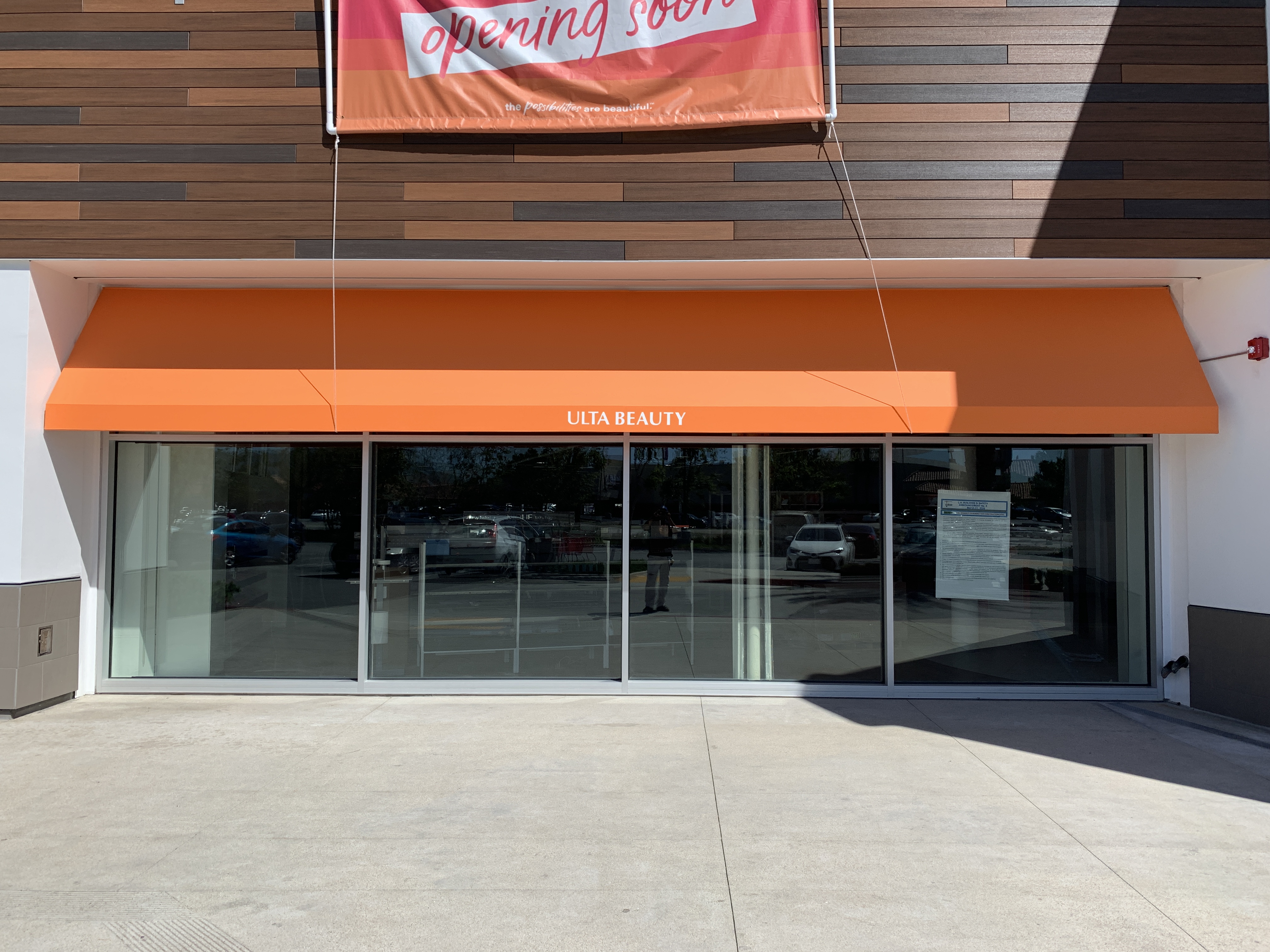
Finished fabric awningNew fabric, trim, and graphics require accurate frame measurements
Planning the system
Fabric may fade, tear, loosen, stain, or become outdated while the underlying frame remains usable. In that case, recovering can refresh the awning without replacing the entire structure. The old cover also provides useful information about seams, attachments, valances, and graphics.
Not every system should be recovered. Bent or corroded frames, failed connections, incorrect drainage, worn retractable hardware, or a layout that no longer fits the building may call for repair or replacement before new fabric is installed.
Available configurations
The recommendation depends on the condition of the frame, fabric, hardware, mounting, graphics, and the amount of service life the property expects from the system.
Explore all shade systemsRemove and remake the fabric cover for a serviceable storefront, window, door, or patio awning frame.
Replace individual fabric sections or a complete cover on a suitable canopy or framed shade structure.
Recover compatible folding-arm awnings while retaining working arms, roller, mounting, and controls where appropriate.
Replace the frame or complete assembly when damage, condition, size, code, mounting, or product compatibility makes recovering impractical.
Project planning
On a row of awnings, seam positions, valance depth, stripes, logos, lettering, trim, and tension should align from frame to frame. Existing covers can be measured, but the frames still need to be checked because field dimensions may vary.
Common applications
Recovering is common where the property wants to retain a serviceable frame while replacing the most visible and weather-exposed material.
Branded storefront awnings, tenant bays, entrances, service counters, and repeated facade covers.
Retail projectsStorefront fabric, outdoor dining covers, retractable awnings, curtains, and guest-area canopies.
Restaurant projectsWindow awnings, building entrances, property canopies, resident amenities, and shared outdoor shade.
Commercial building projectsPatio awnings, window covers, retractable awnings, curtains, and frame-mounted fabric panels.
Residential projectsProject process
The existing condition is documented before new fabric is selected or repair work is promised.
Review the frame, cover, attachments, drainage, hardware, operation, dimensions, damage, access, and original purpose.
Determine which components can remain, which require repair, and whether recovering or full replacement is the responsible path.
Select material, color, seams, valance, trim, graphics, tension, hardware, schedule, and removal plan.
Complete approved frame or hardware work, prepare the new cover, reinstall it, and verify fit and operation.
Awning Repair and Recovering questions
Recovering means removing the old fabric and installing a newly measured and sewn cover on an existing frame that is suitable for continued use.
No. The frame, attachments, dimensions, corrosion, damage, drainage, and current use should be inspected first. Some systems need repair or full replacement.
Often, yes, if the retractable model, roller, arms, motor or manual controls, mounting, and hardware are compatible and serviceable.
Yes. New fabric, color, trim, lettering, and logos can be considered, subject to artwork quality, fabric compatibility, brand approval, landlord criteria, and the available display area.
The decision depends on frame and hardware condition, attachment, size, current use, remaining service life, repair scope, and the cost and limitations of retaining the existing system.
Send the property address, photographs of the entire awning and close-ups of the damage, approximate dimensions, product type, age if known, operating problem, desired fabric or graphic changes, and access information.
Send photographs of the full system and damaged areas, approximate dimensions, the property address, and the change you need. We will review whether repair, recovering, or replacement is the best next step.