
Shade sails
Tensioned fabric with flexible shapes and support layouts for playgrounds, pools, seating, and open recreation areas.
San Diego shade sail servicesParks, Playgrounds and Recreation
We design shade sails, playground canopies, picnic structures, pool shade, and covered seating for parks, recreation departments, and public outdoor facilities.
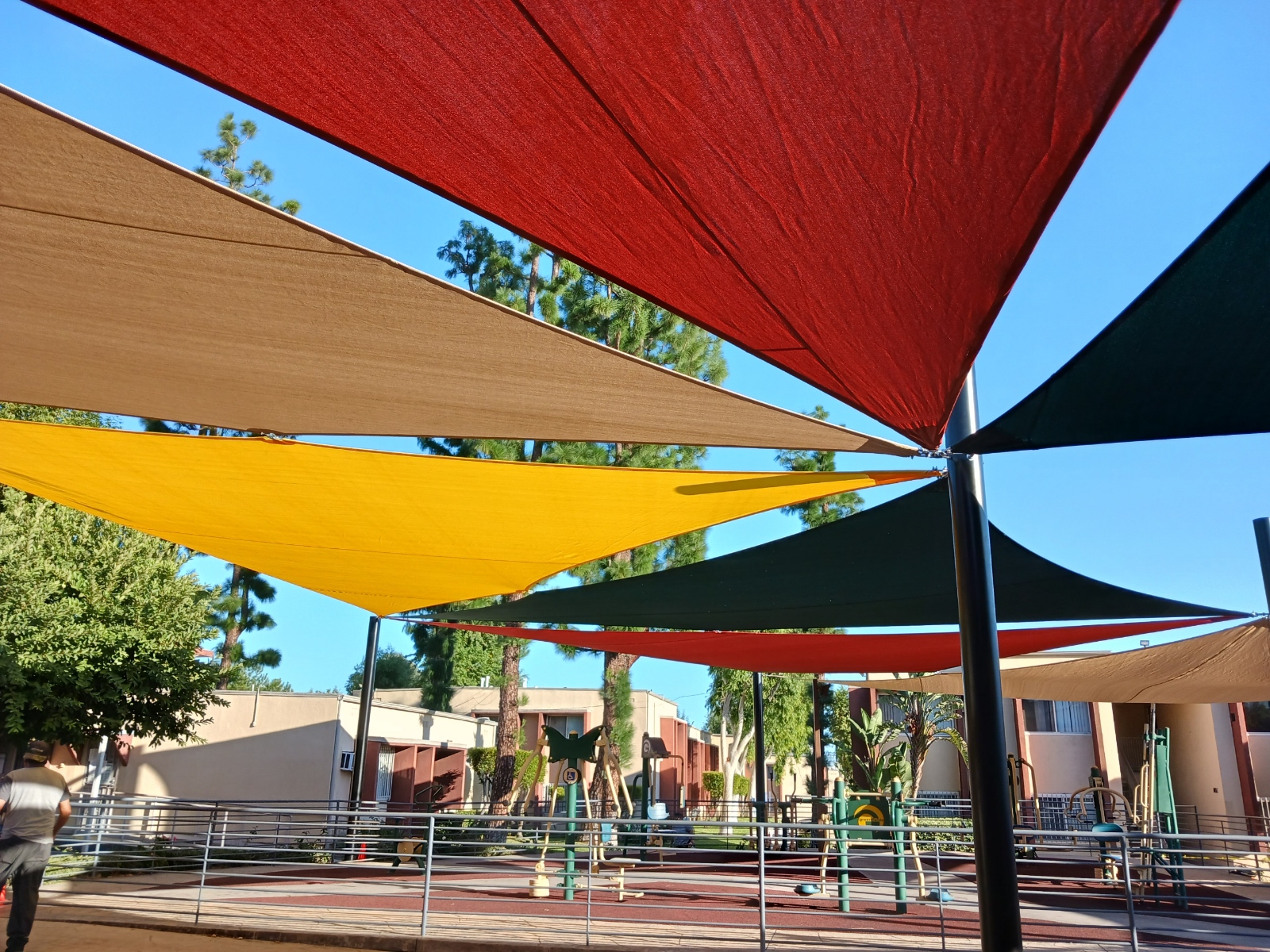
Sylmar park Shade sails
Play, recreation, and public access
A shade sail over a playground has different requirements from a picnic shelter, pool canopy, or spectator structure. Equipment zones, fall areas, supervision, capacity, accessible routes, drainage, trees, and the time of day all affect the footprint and support locations.
We review the full site rather than placing a standard shape over an open area. That includes existing utilities, irrigation, paving, fencing, lighting, maintenance access, wind exposure, and how the public moves between parking, paths, equipment, and seating.
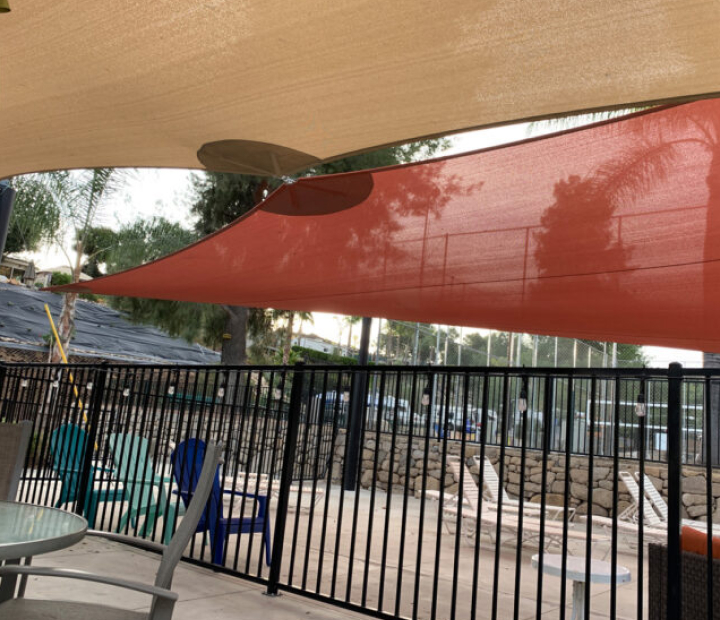
Public parks and neighborhood recreation
Support locations matter in a park. Posts, footings, and tension points must work around equipment, play clearances, paths, irrigation, drainage, and maintenance equipment while placing shade where people actually gather.
Before design begins
Activity zones, supervision, utilities, landscape, wind, and public maintenance all influence a park structure. These questions help locate coverage and supports responsibly.
Play, swimming, exercise, picnicking, events, or spectator use determines the height, footprint, capacity, and clearances.
The sun path, season, hours of use, and the location of seating or equipment help establish the shade target.
Equipment fall areas, pool decks, gates, accessible routes, emergency access, sightlines, and maintenance paths are protected.
Utilities, irrigation, drainage, paving, roots, slopes, lighting, fencing, and foundations affect support placement.
Mowing, cleaning, equipment access, fabric care, seasonal use, vandal resistance, and future replacement are considered.
Park and recreation shade options
The activity, area, sun exposure, support locations, and maintenance needs determine which system is appropriate.
Tensioned fabric with flexible shapes and support layouts for playgrounds, pools, seating, and open recreation areas.
San Diego shade sail servicesPermanent structures for picnic areas, group seating, exercise zones, outdoor programs, and public gathering.
View custom canopiesCabanas, sails, and canopy systems planned around decks, gates, seating, visibility, and water-facility access.
Explore cabanasCanopies for benches, bleachers, team areas, and spectator locations with the required sightlines and circulation.
View metal canopiesArchitectural shade for community centers, park buildings, concessions, and landscaped gathering areas.
View aluminum trellis systemsRelevant project work
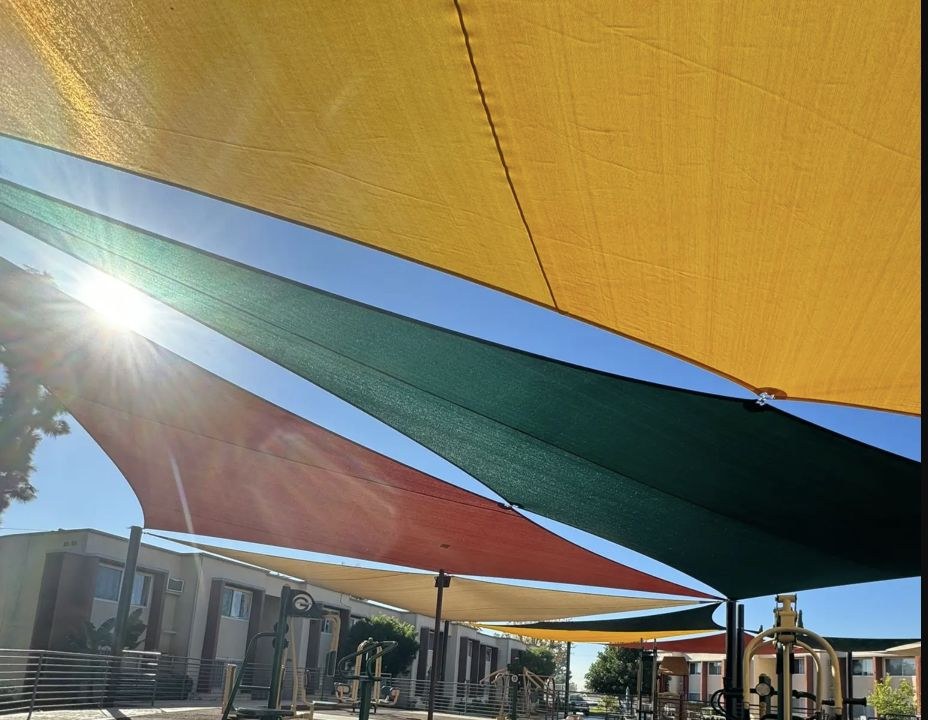
This layered tensioned-sail installation shows how playground shade can provide broad coverage while keeping the activity area open.
Every park project requires a site-specific review of the activity area, underground conditions, access, and public-agency requirements.
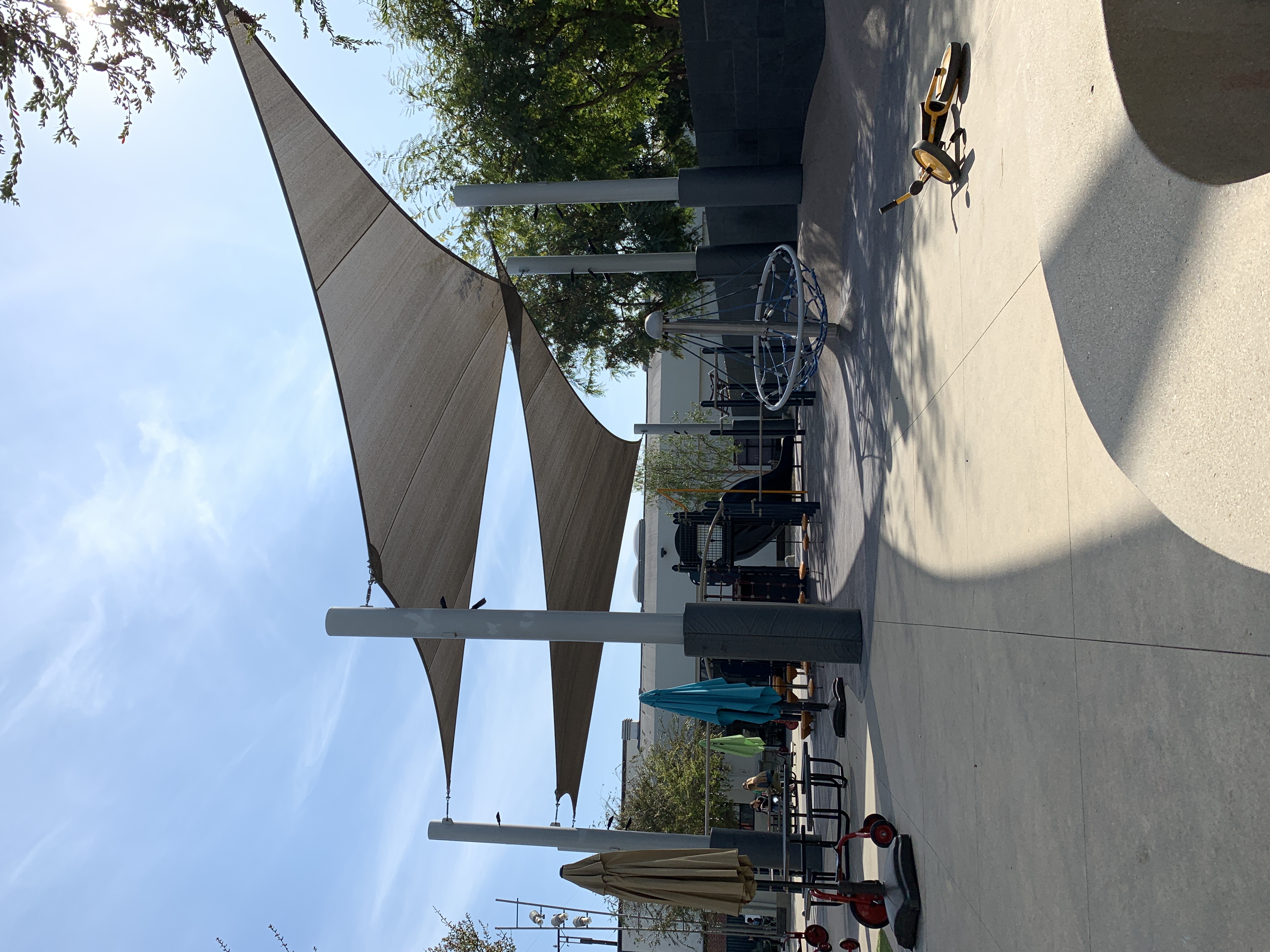
Project process
Park work is coordinated around public closures, equipment and pool clearances, utilities, irrigation, agency review, inspections, and safe construction access.
We review play equipment, fall zones, pools, picnic tables, seating, sports use, age groups, supervision, accessible routes, and the hours shade is needed.
The footprint is developed around equipment clearances, sightlines, utilities, irrigation, trees, drainage, wind exposure, paving, and maintenance access.
Dimensions, fabric or roof material, colors, supports, foundations, structural information, agency comments, and site responsibilities are resolved before fabrication.
Barriers, closures, deliveries, staging, inspections, public routes, programs, and reopening requirements are coordinated before installation.
Questions about parks, playgrounds and recreation
Cost depends on the coverage area, sail or canopy type, number and height of supports, foundations, underground conditions, fabric, engineering, access, agency requirements, and installation phasing. A useful estimate follows a review of the property, intended use, and site conditions.
Depending on the site, options may include shade sails, freestanding canopies, aquatic shade, covered sports seating, and trellis structures. We recommend a system only after reviewing coverage, use, structure, access, and appearance.
Universal Awning can coordinate with cities, parks departments, recreation operators, HOAs, schools, architects, general contractors, and landscape teams. Early coordination helps align the shade work with approvals, documents, site access, and the overall schedule.
A site plan, equipment layout, fall zones, accessible routes, intended age group, desired coverage, existing utilities, photos, and any park or agency standards are helpful starting points.
Yes, when the site can accommodate the required supports and clearances. Deck circulation, gates, visibility, water features, drainage, maintenance, and public access are reviewed first.
A helpful starting package includes the park address, site plan or photos, the activity area, equipment layout, approximate coverage, utility information if available, desired schedule, and agency standards. If the project is still early, send what is available and identify the main coverage goal.
Universal Awning is based in Reseda and serves commercial and residential projects throughout Southern California, including Los Angeles, Orange, Ventura, Riverside, San Bernardino, and San Diego counties. Review the service-area directory or contact the team about a specific property.
Send the site address, a plan or photos, the activity area, desired coverage, and any agency or equipment requirements. We can review the site and next steps.