
Hotel shade planning

Hotel Awnings and Porte-Cochères: What to Plan For

Most hotels need more than one kind of shade: an entrance canopy or porte-cochère for arrivals, cabanas or pergolas at the pool, and fixed or retractable awnings over dining. Plan each area around how guests and staff use it, the weather it gets, the brand standards and when work can happen around guests.

Universal Awning & CanopyOctober 20, 2026Southern California
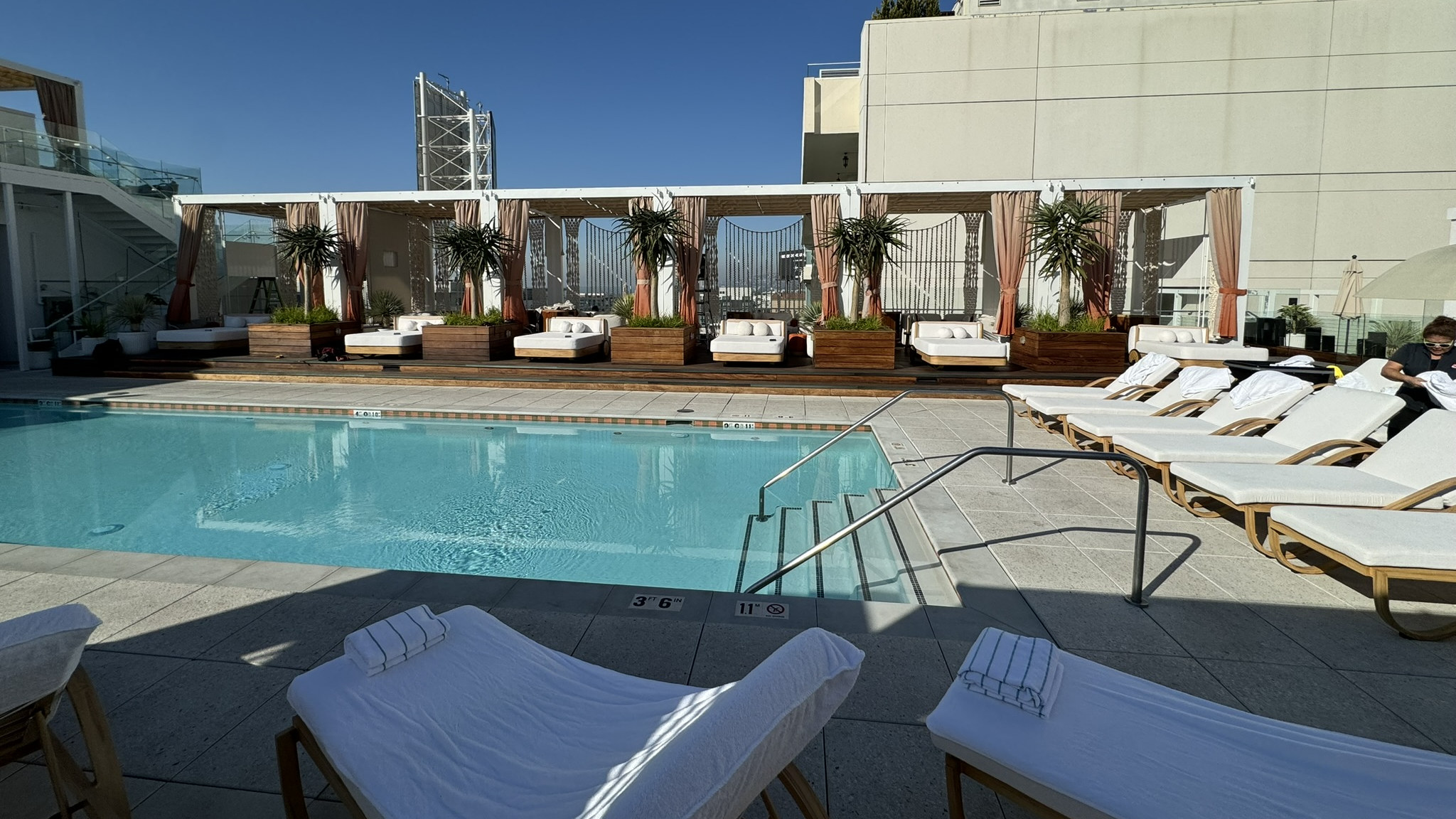
Row of white poolside cabanas with coral curtains on the rooftop pool deck of a boutique hotel in Hollywood
Boutique hotel, Hollywood | Poolside cabanas with curtains on a rooftop deck

A hotel uses shade in more places than most buildings. The front drive, the pool deck, the restaurant terrace and the rooftop each have their own guests, staff routes and weather, so one product rarely fits them all.

This guide walks through each area, what to decide first and what to send when you are ready for an estimate. It builds on our hotel and resort shade work across Southern California.

Hotel awning, canopy, porte-cochère: what each one means

  • Awning: commonly attached to a wall and projecting over a window, door or storefront. It can be fixed or retractable.
  • Canopy: a wall-supported or post-supported cover over a door, lobby, walkway or arrival point.
  • Porte-cochère: a covered drive-through entry at the front door, where guests get in and out of cars under cover.
  • Cabana: a roofed frame for one group of guests, often with side curtains, set on a pool deck, rooftop or spa area.

Hotel shade by area

AreaCommon structureDecide first
Front drive and lobbyEntrance canopy or porte-cochèreWall-supported or post-supported, clearances, where water drains
Pool deckCabanas, shade sails, pergolasDeck paths, pool gates, furniture plan, privacy
Restaurant terraceFixed or retractable awningsHow much the shade should adjust during the day
Courtyards and walkwaysPergolas, trellis, covered walkwaysPermanent frame or lighter cover, link between buildings
RooftopCabanas, pergolas, retractable shadeWind exposure at height, attachment points

Porte-cochères and guest arrivals

The arrival canopy is the first thing guests see. It should mark the entrance clearly and keep people dry from the car to the door.

Wall-supported or post-supported

A wall-supported canopy works when the building can carry it and the coverage stays close to the facade. When coverage reaches farther from the building, as a drive-through often does, posts and foundations may be needed. Post locations have to work with the drive lanes, curbs and walking routes.

Clearances, signs and lights

Check the canopy against doors, signs, lights, cameras and fire equipment. For a drive-through, confirm the clear height the hotel needs for the vehicles that use the drive.

Drainage

Plan where the water goes before the size is set. Runoff should land away from the arrival route, the doors and the spots where guests wait with bags.

Our guide to planning a commercial entrance canopy goes deeper on coverage and drainage. For the structure itself, see custom canopies and metal canopies.

Plan each part of the hotel for the guests and staff who use it, then make the pieces look like they belong together.

Pool decks and cabanas

Pool shade has to work after the lounge chairs are in place. Cabana sizes should be checked against seating, tables, doors, pool fencing, deck drains, paths and staff access, so a good-looking row does not make the deck feel tight.

Cabanas can be open, curtained or built as a repeated row. Layouts can include side curtains or slide-on-wire overhead fabric. For larger rows with matching bays, there is the Universal Cabana System. Open areas around the pool may suit shade sails.
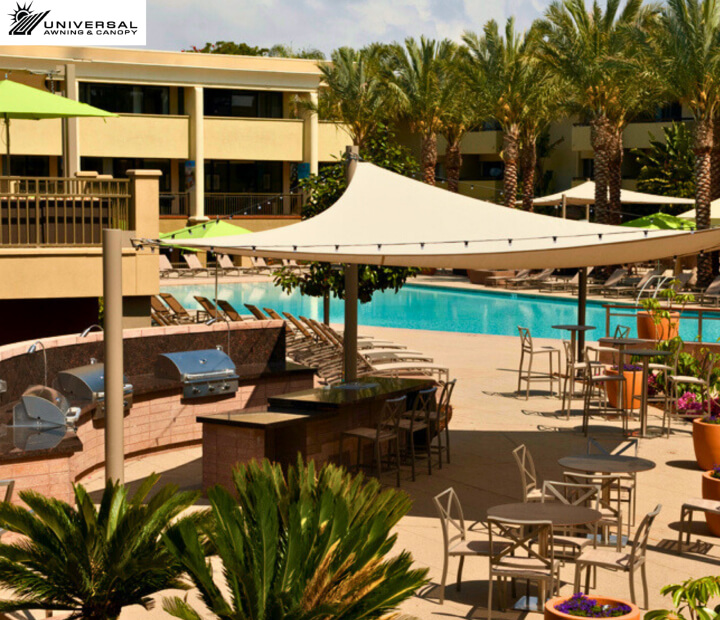
Cream tensioned fabric canopy over an outdoor bar and seating beside a resort pool lined with palm trees
A tensioned fabric canopy shades an outdoor bar beside a resort pool.

Restaurants, terraces and rooftops

Hotel dining areas often need shade that can change. A retractable awning opens for sun and pulls back when guests want it. A fixed awning or a 4K aluminum trellis gives a permanent frame over a terrace or courtyard. Our post on fixed vs retractable commercial awnings compares the two, and restaurant awnings for outdoor dining covers seating areas.

Rooftops get more wind and more sun than the ground floor. That changes the frame, the fabric and how the structure attaches to the roof, so plan the rooftop separately from the pool deck below it.

Engineering, permits and brand standards

Many fixed awnings, canopies and shade structures need a building permit, and some cities add planning or design review. Rules change by city, structure type, size and attachment. We confirm the engineering and permit needs for each project.

Our engineering work includes wind load calculations and seismic analysis. Brand colors, finishes and sightlines are reviewed with the design team so each structure fits the property.

Working around guests

Hotel work has to happen around guests. Deliveries, staging, quiet hours, guest circulation, pool access and inspections are planned with the property team before installation starts. Larger jobs can be split into phases around occupancy, events and the busy season. You can see the full project process here.

What to send for an estimate

  • The property address and photos or plans
  • The areas that need shade: arrival, pool, dining, rooftop
  • Brand standards, colors and finishes
  • Desired timing and any busy seasons or events
  • Operating or access limits: quiet hours, pool rules, service routes

We work with hotels across Los Angeles, Orange, Ventura, Riverside, San Bernardino and San Diego counties. See canopies in Los Angeles, Orange County and San Diego, or the full list of cities we serve.

Common questions

What is a porte-cochère?

A porte-cochère is a covered entry that guests can drive or walk under at the front door, so they can get in and out of cars out of the sun and rain. At a hotel it is usually the main arrival point, so it has to work for cars, people and luggage at the same time.

Do hotel awnings and canopies need a permit?

Often, yes. Many fixed awnings, canopies and shade structures need a building permit, and some cities add planning or design review. Rules vary by city, structure type, size and how it attaches, so the engineering and permit needs are confirmed for each project.

Can installation be scheduled around hotel guests?

Yes. Access, guest circulation, quiet hours, events and seasonal demand can be reviewed with the property team so the installation plan fits hotel operations.

Which shade systems do hotels use most?

Depending on the site, options include poolside cabanas, entrance canopies, pergolas, retractable awnings, fixed fabric awnings and shade sails. The right one depends on coverage, use, structure, access and appearance.

What affects the cost of a hotel shade project?

The number of structures, size, materials, privacy features, lighting, structural conditions, engineering, access and installation phasing. A useful estimate follows a review of the property and how each area is used.

Discuss your hotel

Planning shade for a hotel or resort?

Tell us which areas of the property need shade and send any plans or photos. We can review them with your project team and talk through layout, finishes, access and installation timing.